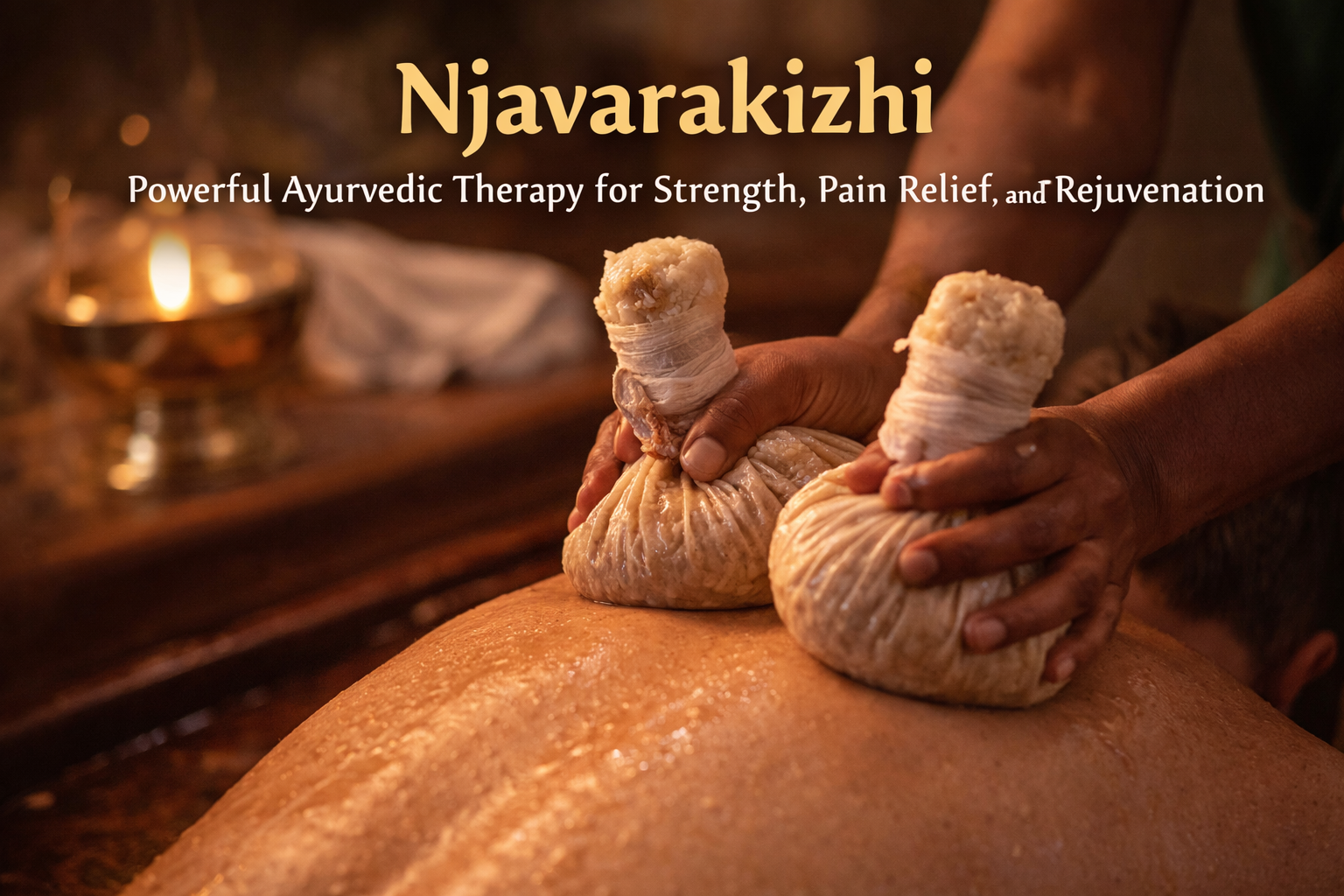
Njavarakizhi: A Powerful Ayurvedic Therapy for Strength, Pain Relief, and Rejuvenation
Njavarakizhi is a traditional and highly effective Ayurvedic therapy known for its nourishing, strengthening, and rejuvenating effects on the body. Rooted in classical Ayurveda, this treatment uses Njavara rice, a unique medicinal rice variety, combined with herbal decoctions and medicated oils to promote healing and restore balance.
This therapy is especially beneficial for individuals experiencing muscle weakness, joint pain, neurological disorders, or physical exhaustion due to a demanding lifestyle.
What Is Njavarakizhi?
Njavarakizhi (also known as Shashtika Shali Pinda Sweda) is a form of sudation therapy (Swedana). In this treatment, cooked Njavara rice is tied into soft herbal boluses (kizhi) and gently massaged over the body using warm medicated oil or milk-based herbal decoctions.
Using Ayurvedic Njavarakizhi treatment the warmth and herbal nourishment penetrate deep into tissues, strengthening muscles, joints, and nerves.
How Njavarakizhi Is Performed
The procedure follows a systematic approach under trained Ayurvedic supervision:
- Preparation: Njavara rice is cooked in herbal milk or decoction.
- Oil Massage (Abhyanga): A light massage with warm medicated oil prepares the body.
- Kizhi Application: Warm rice boluses are rhythmically applied over the body.
- Reheating: Boluses are reheated regularly to maintain therapeutic warmth.
- Rest Period: Post-therapy rest enhances absorption and recovery.
Each session typically lasts 45–60 minutes.
Key Benefits of Njavarakizhi
- Strengthens muscles and joints
- Relieves pain, stiffness, and inflammation
- Improves mobility and flexibility
- Nourishes nerves and tissues
- Enhances circulation and immunity
- Promotes overall rejuvenation
This therapy is especially valued for its brimhana (nourishing) properties.
Who Can Benefit from Njavarakizhi?
- Njavarakizhi is commonly recommended for:
- Arthritis and joint disorders
- Muscle weakness or atrophy
- Neurological conditions (under guidance)
- Post-injury or post-illness recovery
- Sports fatigue and physical exhaustion
- Individuals with aggravated Vata dosha
When Is Njavarakizhi Not Recommended?
Although generally safe, Njavarakizhi may not be suitable during:
- Fever or acute infections
- Severe indigestion
- Certain skin conditions
- Pregnancy (unless advised by an Ayurvedic doctor)
A professional consultation ensures safe and effective treatment.
Njavarakizhi vs Regular Massage Visible Difference
Unlike standard oil massages that focus mainly on relaxation, Njavarakizhi works at a deeper therapeutic level. The medicinal rice and herbal decoctions provide nutrition to muscles and nerves, making it ideal for long-term healing rather than temporary relief.
How Many Sessions Are Required?
The number of sessions depends on individual health needs:
- General wellness: 3–5 sessions
- Chronic conditions: 7–14 sessions
- Rehabilitation therapy: Customized programs
Consistent treatment delivers the best results.
Njavarakizhi is a powerful Ayurvedic therapy that combines warmth, herbal nourishment, and skilled touch to restore strength and vitality. Whether you are recovering from illness, managing joint pain, or simply seeking deep rejuvenation, Njavarakizhi treatment offers a natural, holistic solution.
For best results, always undergo this therapy at a qualified Ayurvedic center under expert guidance.